Sunday, April 23, 2023

Sinosaurus: Beast of the Week

This week we will be looking at one of the first large predatory dinosaurs.  Make way for Sinosaurus triassicus!

Sinosaurus triassicus life reconstruction in watercolors by Christopher DiPiazza

Sinosaurus was a meat-eating dinosaur that lived in what is now Southwest China during the early Jurassic period, between 201 and 196 million years ago.  From snout to tail it measured 18 feet (5.5 meters) long. It's genus name translates to "Chinese Lizard/Reptile" and the species name is in reference to the Triassic period which is when it was first believed to have lived upon its discovery. (We now know it was in the Jurassic.)

Sinosaurus is a dinosaur that underwent a few identity changes as paleontologists discovered more fossils and learned more about it over the years.  Most prominently it was believed to be an Asian species of the more popular North American theropod, Dilophosaurus, and was originally named Dilophosaurus sinensis.  This makes sense at first since both of these dinosaurs are known for having two bony crests on the top of their snouts.  They both also even have a similar notch towards the front of their upper jaws.  However, as more material from Sinosaurus was unearthed over the years, it was determined that it was more closely related to later kinds of theropods, called the tetanurans, and therefore was given its own genus name, Sinosaurus.  Tetanurans are a broad group of theropods characterized by how their tails were stiffened in life thanks to how their tail vertebrae interlock together.  Tetanurans are also all more closely related to birds than to other dinosaurs, including other kinds of theropods.  According to this updated idea, Sinosaurus was particularly closely related to another crested theropod from the early Jurassic, Cryolophosaurus.  

Sinosaurus skeletal mount on display at the Maryland Science Center in Baltimore, Maryland, USA.

Sinosaurus had curved serrated teeth that would have been ideal for slicing through and stripping off chunks of meat from bodies.  The upper jaw notch towards the front of its snout may have been an adaptation for hooking into and ripping through the skin of other dinosaurs to get into the meat inside, similar to the hooked beaks of modern carnivorous birds, like hawks, eagles, and vultures.  Sinosaurus is probably most known for its bony crests which adorned the top of its skull.  These crests had holes in them, making them lightweight, and may have served as visual display adaptations within the species or even possibly could have helped absorb impact, allowing Sinosaurus to bite harder without injury.

Sinosaurus skull from in Zhang's 2023 paper. (listed below)

Sinosaurus shows evidence of tooth injury in life in the form of what is called alveolar remodeling.  This means that it experienced a broken tooth and the ridge of bone in the jaw that includes the tooth sockets, called the alveolar bone, changed shape in the healing process following the loss of the tooth.  Dinosaurs losing and replacing teeth is common in the fossil record, but this is the only recorded instance of an actual tooth related injury that healed in this way known so far for a dinosaur.  

Sinosaurus lived during a time when predatory dinosaurs were first starting to get truly large.  Prior to this most meat-eating dinosaurs were much smaller and more gracile, like Coelophysis, and even the biggest plant-eaters, like Plateosaurus, weren't that huge compared to what would later evolve.  At 18 feet long, Sinosaurus was likely the top of the food chain in its environments.  

References

Chung-Chien, Young (1940). "Preliminary Notes on the Lufeng Vertebrate Fossils*: Young:-Lufeng Vertebrate Fossils"Bulletin of the Geological Society of China20 (3–4): 235–240.

Dong, Z.M. (2003). "Contribution of New Dinosaur Materials from China to Dinosaurology" (PDF)Memoir of the Fukui Prefectural Dinosaur Museum2: 123–131.Xing, L.D.; Bell, P.R.; Rothschild, B.M.; Ran, H.; Zhang, J.P.; Dong, Z.M.; 

Rauhut, O.W.M. (2003). "The interrelationships and evolution of basal theropod dinosaurs". Special Papers in Palaeontology69: 215.

Zhang, W.; Currie, P.J. (2013). "Tooth loss and alveolar remodeling in Sinosaurus triassicus (Dinosauria: Theropoda) from the Lower Jurassic strata of the Lufeng Basin, China"Chinese Science Bulletin58 (16): 1931–1935.

Zhang, Z.-C.; Wang, T.; You, H.-L. (2023). "A New Specimen of Sinosaurus triassicus (Dinosauria: Theropoda) from the Early Jurassic of Lufeng, Yunnan, China"Historical Biology. in press.

Thursday, April 20, 2023

The Paleontology Behind Pokemon: Part 3

 It is time for my third installment of Paleontology Behind Pokemon, a post where I delve into the design choices behind pokemon based on dinosaur and other prehistoric animals.  If you have not seen the first two pokemon posts you can check out part one here and pat two here.

Walking Wake

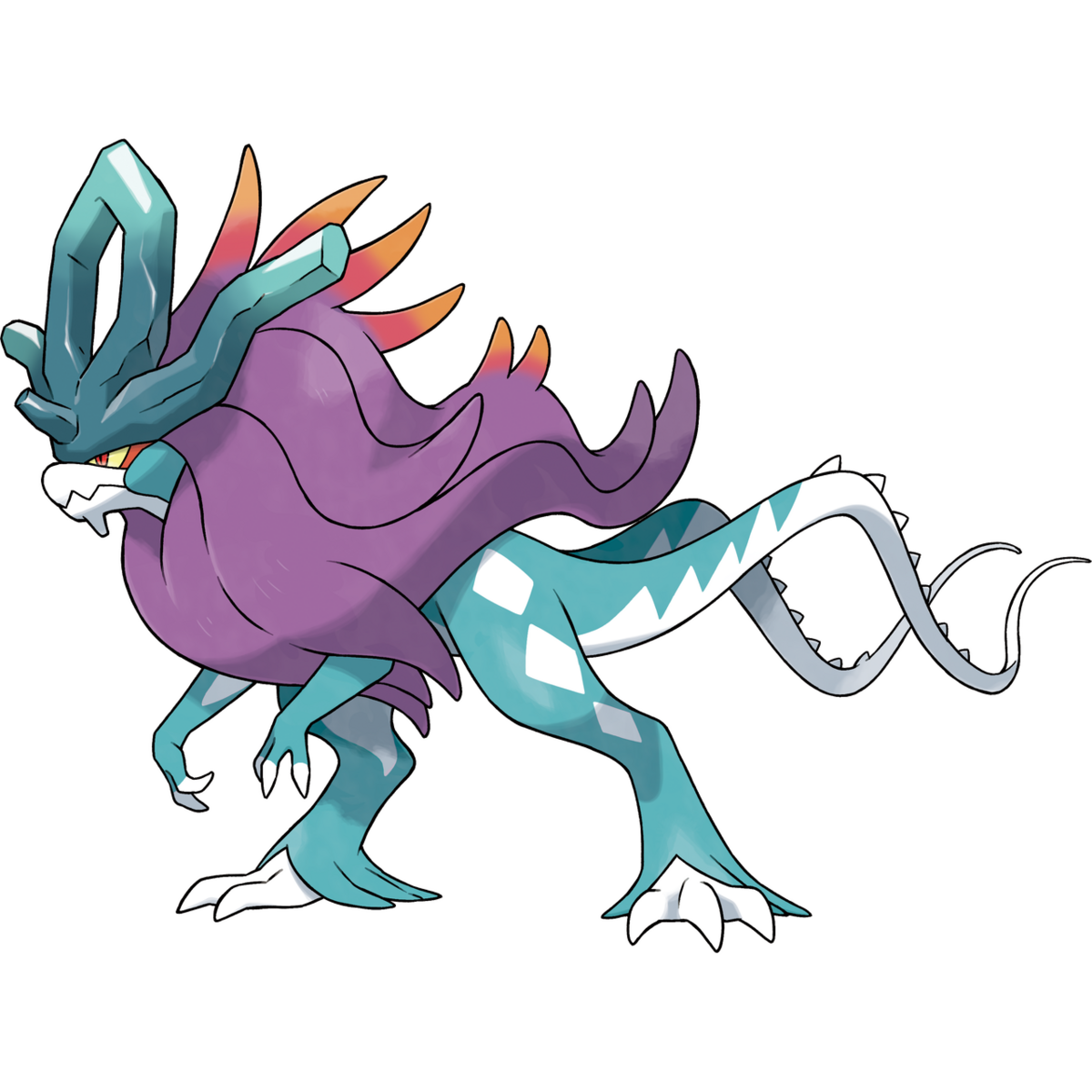
The newest generation of pokemon yielded a few exciting new desings that are clearly based on dinosaurs.  Possibly the most surprising is the new look of the legendary pokemon, Suicune, called Walking Wake.  Suicune was originally based on a dog or a generalized mammal, but Walking Wake is very clearly based on a theropod dinosaur.  It has a proportionally smaller head, long legs, and short arms with three fingers on each hand.  At first it looks like it could be a dromaeosaur but it doesn't have the signature giant toe claw on each foot and I feel that if a pokemon were to be based on a dromaeosaur that would be the one feature that would be included, if not emphasized.  

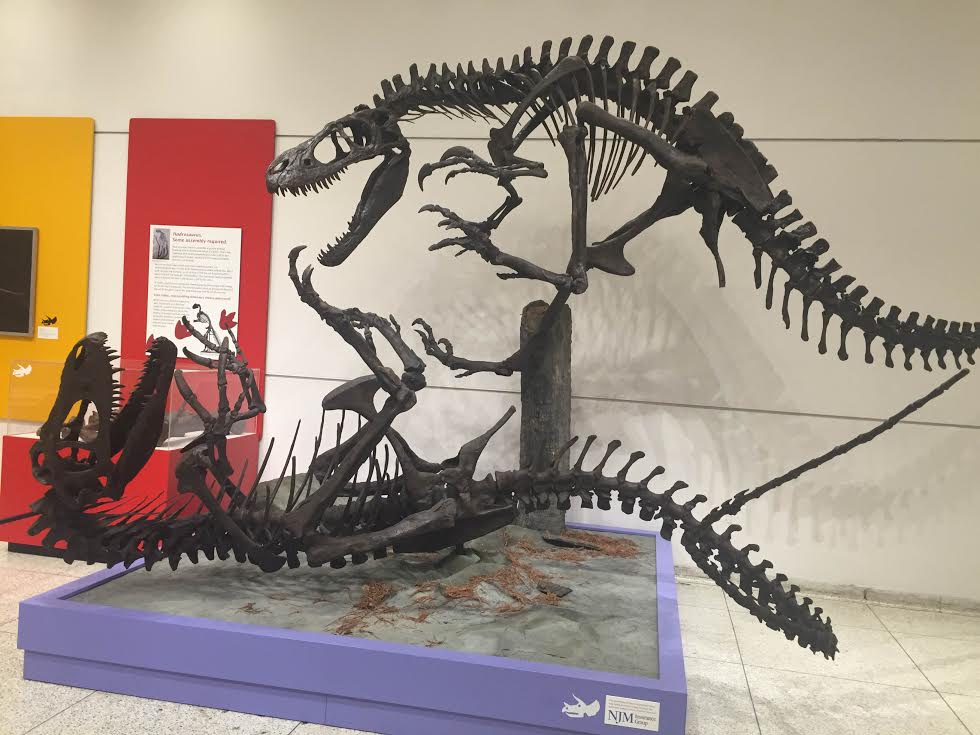
Dryptosaurus skeletal mounts on display at the New Jersey State museum.

My realistic assumption is Walking Wake isn't based on any particular taxa or even group of dinosaur beyond theropod, but in my headcannon it is a tyrannosauroid, like Dilong, Moros, or Dryptosaurus.  I named mine "Drypto" for that reason. (plus it's water type and drypto sounds like drip which is a thing water does.)

Frigibax, Arctibax, and Baxcalibur

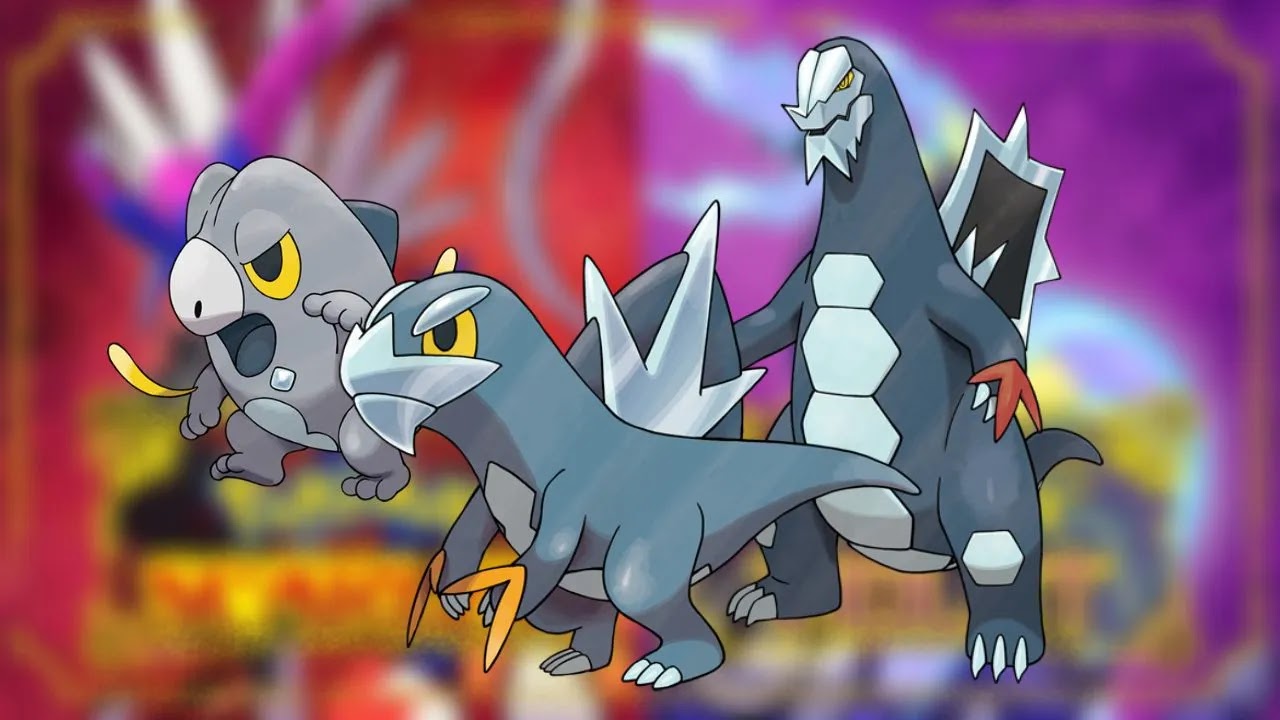
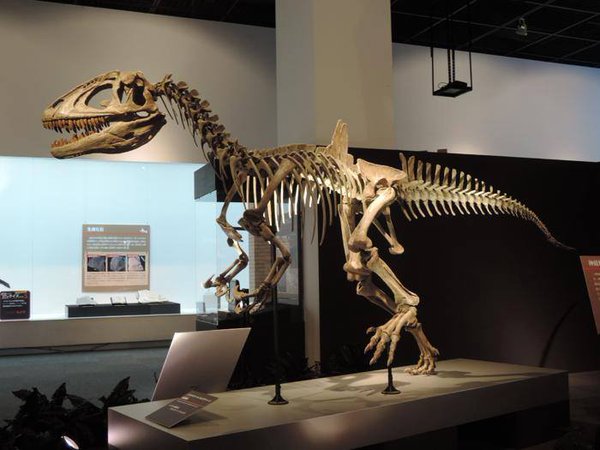
Walking Wake wasn't the only dinosaur introduced in the newest wave of pokemon.  We also have the evolution line of dragon/ice pokemon, Frigibax, Arctibax, and Baxcalibur.  All three of these pokemon also appear to be based on theropod dinosaurs and all three sport a blade-like fin or ridge on their backs.  At first Spinosaurus seems the most likely source of inspiration, but they lack the long snout of a spinosaur and pokemon is usually pretty good about using up to date looks when they do use specific dinosaurs for references.  I have also read they are based on Concavenator, which also has a more isolated fin-shaped hump on its back.  Part of me can't help but wonder if their names are playing off of dinosaurs, like Altispinax and Becklespinax, both of which also had high ridges on their backs, but are known from much less complete fossil material.  

Concavenator skeleton on display at the Fukui Prefectural Dinosaur Museum.


As always it is also always safe to assume these pokemon could be inspired by all or many of the above fossils, resulting in a more generic, but no less cool, design.  I also want to note that Arctibax looks the most like an actual dinosaur, due to its posture, and the fully evolved Baxcalibur looks more like Godzilla than a real dinosaur due to its proportions and more upright posture.

Tropius


Tropius is a pokemon introduced in the third wave of pokemon games.  It is a grass/flying type and is clearly based on a long-necked sauropod dinosaur.  I have also read it is more specifically inspired by the cryptid, Mokele-mbembe, a sauropod dinosaur said to live in the Congo River according to legend.  The grass typing and incorporating banana trees into the design is pretty clever, but the flying typing is just bizarre in my opinion.  A sauropod seems like the least likely animal that would be flying, especially with wings made of leaves!  I also always found it odd how Tropius has no tail.  

Chikorita, Bayleef, and Meganium


Speaking of grass type sauropods, we can't forget Chikorita and its evolutions.  Introduced in the second generation of pokemon as one of the starters, Chikorita's design isn't obvious at first.  But once it evolves, gaining a long neck, it becomes pretty clear this little pokemon is a sauropod. 

Giraffatitan skeleton on display in Berlin.

The final evolution, Meganium is even more obvious.  I can't help but think of them as brachiosaurs, since Meganium has a shorter tail and more upright neck posture.

Great Tusk


Another new pokemon introduced in the latest generation is the ancient form of the second generation pokemon, Donphan, called Great Tusk.  Donphan was based on elephants and Great Tusk appears to be mostly based on Mastodon or Mammoths, based on its tusk shape.   

Mastodon skeleton on display at the Rutgers Geology Museum.

It also looks like actual dinosaur features were incorporated into it as well with its armored back, spikes, and reptile-like tail. 

Breloom

Breloom is a grass/fighting type pokemon that evolves from Shroomish, a literal mushroom.  But Breloom appears to take the mushroom theme and apply it to a dinosaur shape, standing on two digitigrade feet, having short arms, a beak, and a long tail.  

Stegoceras skull.  Breloom's head resembles the flared out and domed skulls of many pachycephalosaurs.

Specifically Breloom looks to be most similar to pachycephalosaurs, with the wide mushroom cap on its head resembling a domed skull.  

Tyranitar

Tyranitar is a pokemon released in the second generation of pokemon.  It is a rock/dark type and has always been one of the most popular pokemon based on its cool design and strength in battle.  Tyranitar is also the first pokemon I've written about here that isn't actually based on anything from paleontology directly but I kept getting requests on social media to include it since I started writing these posts so I figured I'd finally set the record straight here.  At first Tyranitar seems like it would be based on a Tyrannosaurus, but I'm convinced this is based on its name only and little else.  In fact, nothing about its actual design is directly based on any real dinosaurs beyond anything extremely general.  Tyranitar DOES however appear to be directly based on a kaiju (Japanese giant monster traditionally represented by an actor in a costume) from the Ultra Man franchise, named Bemular.  

Bemular, the monster Tyranitar appears to be the most based on.

Sunday, April 9, 2023

Habrosaurus: Beast of the Week

 This week we'll be checking out a prehistoric amphibian.  Make way for Habrosaurus!

Habrosaurus was a salamander that lived in what is now Alberta, Wyoming and Montana, during the late Cretaceous period into the early Paleocene (surviving the asteroid that wiped out most of the dinosaurs), from 68 to 58 million years ago.  From snout to tail Habrosaurus is estimated to have been over five feet (1.6 meters) long, making it one of the largest salamanders of all time.  When alive Habrosaurus likely would have likely preyed on smaller aquatic animals, like shrimp and mollusks. (all amphibians are predators at least as adults) The genus name translates to "Graceful Reptile" even though it was and amphibian, not a reptile.

Life reconstructions in watercolors of Habrosaurus dilatus by Christopher DiPiazza.

There are currently two species of Habrosaurus known on the fossil record.  Habrosaurus prodilatus is the older species, lived in what is now Alberta, Canada, and would have shared its habitat with dinosaurs like Styracosaurus, Parasaurolophus, and GorgosaurusHabrosaurus dilatus is the later species and lived in what is now Western United States, and would have shared its home with dinosaurs, like Triceratops, Ankylosaurus, Pachycephalosaurus, and Tyrannosaurus.

Habrosaurus was a member of the siren (sirenidae) family of salamanders which have numerous species still alive today, all native to the southern United States.  Sirens are characterized by having extremely long, eel-like bodies, front limbs only (no back legs), gills, and live their entire lives in freshwater but can also burrow into the mud if they need to.  Unlike many amphibians, sirens do not undergo metamorphosis, but rather stay fully aquatic their entire lives, simply growing larger as they age.  

Teeth and jaw fragments from Habrosaurus dilatus from Gardner's 2003
 paper linked below.

Fossils of Habrosaurus dilatus' teeth indicate that it specialized in eating hard-shelled prey, like snails and shrimp.  Both species also may have been preying on fish and other animals small enough to fit in their mouths if they wandered too close.  Living sirens are some of the few kinds of amphibians known to actually be omnivores as adults, supplementing their mostly meat diet with water plants, as well.  There is no way to know if Habrosaurus may have eaten some plants as well when it was alive.  iLike living sirens, Habrosaurus likely spent its time on the muddy bottom of swamps and other bodies of fresh water, where it relied on secrecy to ambush prey.  I wonder how many unsuspecting large dinosaurs were bitten on the nose by an angry Habrosaurus, as they tried to take a drink?

That's all for this week!  Leave a comment below!

References

Gardner, James D. (November 2003). "Revision of Habrosaurus Gilmore (Caudata; Sirenidae) and relationships among sirenid salamanders"Palaeontology46 (6): 1089–1122.

Hill, R. L., Mendelson, J. R. & Stabile, J. L. 2015. Direct observation and review of herbivory in Sirenidae (Amphibia: Caudata). Southeastern Naturalist 14, N5-N9.

K. Roelants, D.J. Gower, M. Wilkinson, S.P. Loader, S.D. Biju, K. Guillaume, L. Moriau, F. Bossuyt (2007) Global pattern of diversification in the history of modern amphibians. Proc. Natl. Acad. Sci. USA, 104: 887-892

Sunday, March 26, 2023

Coelophysis: Beast of the Week

This week we will be taking a look at another very well-studied dinosaur.  Check out Coelophyis bauri!  Coelophysis was a relatively small, meat-eating dinosaur that lived during the late Triassic period, between 215 and 200 million years ago, in what is now the Western United States.  Fully grown, adults measured about ten feet long from snout to tail.  Coelophysis bones are mostly known from New Mexico (where it is the official state fossil), but evidence of this dinosaur has been found as far as the east coast, as well, in the form of tracks.  The genus name, Coelophysis, translates to "Hollow Form" in reference to the dinosaur's hollow bones, a trait actually common to many dinosaurs, not just Coelophysis.  When alive Coelophysis would have coexisted with creatures like crocodilian relatives, Typothorax, Shuvosaurus, and Postosuchus.

Group of Coelophysis bauri of varying ages gathering in a dried river bed.  Fossils suggest large groups of Coelophysis died at about the same time relatively quickly due to harsh environments.  Watercolor reconstruction by Christopher DiPiazza.

Coelophysis lived during a time in history when dinosaurs were obviously around, but had not become as diverse and large as most people know them to be just yet.  During the Triassic, the biggest, most formidable animals were actually other kinds of archosaurs like pseudosuchians (group that includes modern crocodilians) like Typothorax, Postosuchus, and Shuvosaurus, as well as the crocodile-looking-but-not-really-close-to-crocodiles, the phytosaurs, like Rutiodon.  In fact, actual dinosaurs were somewhat of a rarity during the Triassic. If you would like the full story on how reptiles were evolving and going extinct during this time, please go read my post about my work in New Mexico excavating the fossils of these creatures.  It was a fascinating time in earth's history.

This is a fossil I found that has been split right down the middle, showcasing how hollow it is.  It is most likely from a Coelophysis


Coelophysis likely specialized in hunting small prey by using speed and agility.  It was very lightly built, most of its ten-foot length consisting of its neck and tail, and would have been able to run quickly on its hind legs, which were slender, but strong.  It had a long, narrow snout with a slight notch at the tip of the upper jaw, which could have helped it hold on to struggling prey.  Inside the mouth were many small, serrated teeth, for slicing meat.  Originally it was believed that Coelophysis was cannibalistic, since one specimen in New Mexico was discovered with what looked like baby Coelophysis bones inside where its stomach used to be.  Under further inspection, however, it was decided that these bones were in fact belonging to one of the small species of land crocodilians that would have been common back then.  However, small broken bones and teeth that were confirmed to be from baby Coelophysis were found in the stomach cavities and around the mouths of other adult specimens, showing that cannibalism of smaller individuals still was probably taking place.  In turn, Coelophysis would have needed to be weary of becoming prey to the bigger predators alive back then, like Postosuchus or Redondasaurus.

Coelophysis cast on display at the Mesalands Dinosaur Museum, in Tucumcari, New Mexico.  You can see the bones of what was originally believed to be a baby in the stomach cavity.


Coelophyisis is one of the few prehistoric dinosaurs that paleontologists can pretty much completely map out as far as its skeleton and growth is concerned.  This is because of a fossil site in New Mexico, called the Ghost Ranch Formation, which was discovered with literally hundreds of individual specimens of Coelophysis, including fully-grown adults down to small babies.  Nobody knows for certain why so many of these dinosaurs died at this location, but it is likely that the Ghost Ranch area used to be a river during the Triassic.  Animals, like Coelophysis would have come to the river bed to drink during the dry season, died from thirst, then their bodies would have been buried under mud to be fossilized when the water did come through.  Another possibility is that they all gathered to hunt a common food source, like spawning fish (which Coelophysis' long snout and neck could have been adaptations for) and were wiped out by a flash flood.

A team of paleontologists, lead by Dr. Daniel Barta, recently investigated how Coelophysis grew by making thin slices in Coelophysis bones and looking at ring-like patterns on the inside, each ring indicating a year of the animal's life. (much like the growth rings of a tree) They determined that not all individual Coelophysis grew at the same rate.  Some very large individuals turned out to actually be very young when they died, while other relatively small individuals were actually much older.  This implies that Coelophysis' growth was probably more based on how much an animal was eating, which is similar to how many modern reptiles grow today.  This may have been a helpful trait for animals that lived in harsh environments where food wasn't consistently available over time where animals with more consistent growing patterns might starve.

There is evidence that Coelophysis may have also lived on America's east coast of North America, including parts of my home state, New Jersey!  Although no bones were ever found there, we do have lots of theropod dinosaur tracks that are from the exact time that Coelophysis was alive, and match the size of its feet.  Because it cannot be proven 100% (no bones) that these dinosaurs were actually Coelophysis, however, they were given their own name, Grallator.  

Grallator (most likely Coelophysis) tracks that were unearthed in New Jersey.  These slabs are on display at the Rutgers Geology Museum in New Brunswick, New Jersey.

Coelophysis is an important dinosaur, not only because scientists are able to study it so extensively, but also because it represents a turning point in dinosaur evolution.  Coelophysis lived during a time where many other kinds of reptiles, like the phytosaurs and most pseudosuchians, were about to go extinct, but dinosaurs were not.  Coelophysis' lineage would later flourish even more and radiate into the many theropod dinosaurs everyone knows and loves and eventually the birds, which are still successful today!  

That is all for this week!  As always feel free to comment below or on our facebook page.

References

Barta, D.E., Griffin, C.T. & Norell, M.A. Osteohistology of a Triassic dinosaur population reveals highly variable growth trajectories typified early dinosaur ontogeny. Sci Rep 12, 17321 (2022). https://doi.org/10.1038/s41598-022-22216-x

Gay, R.J. (2002). "The myth of cannibalism in Coelophysis bauri". Journal of Vertebrate Paleontology 22 (3): 57A.

Nesbitt, S. J.; Turner, A. H; Erickson, G. M; Norell, M. A (2006). "Prey choice and cannibalistic behaviour in the theropod Coelophysis". Biology Letters. 22 2 (4): 611–614. doi:10.1098/rsbl.2006.0524. PMC 1834007. PMID 17148302.

Rinehart, L.F.; Lucas, S.G.; Heckert, A.B.; Spielmann, J.A. & Celesky, M.D. (2009). "The paleobiology of Coelophysis bauri (Cope) from the Upper Triassic (Apachean) Whitaker quarry, New Mexico, with detailed analysis of a single quarry block". New Mexico Museum of Natural History & Science, a division of the Department of Cultural Affairs Bulletin 45: 260.

Schwartz, Hilde L.; Gillette, David D. (1994). "Geology and taphonomy of the Coelophysis quarry, Upper Triassic Chinle Formation, Ghost Ranch, New Mexico". Journal of Paleontology 68 (5): 1118–1130. JSTOR 1306181.

Sunday, February 26, 2023

Balaenognathus: Beast of the Week

This week we'll be checking out a very unusual little pterosaur, Balaenognathus maeuseri! 

Balaenognathus was a pterosaur that lived in what is now Germany during the late Jurassic period, between 157 and 145 million years ago.  It was relatively small for a pterosaur, with a wingspan of a little under 4 feet (1.17 meters) from wingtip to wingtip. The genus name translates to "Bowhead whale jaw" after the modern Bowhead whale, one of many kinds of whale that sports structures called baleen in its mouth for filter-feeding on tiny animals.  When alive it is likely Balaenognathus fed on tiny animals in the water with the help of its specialized teeth.

Watercolor life reconstruction of Balaenognathus by Christopher DiPiazza.

Balaenognathus' most distinctive feature is its face, with a long, thin snout that curved slightly upwards toward the tip then flared out in an almost square shape at the very end.  The sides of both the upper and lower jaws were lined with hundreds of extremely thin teeth that were also hooked at the ends.  This appears to be an adaptation for capturing tiny creatures out of the water, much like the baleen of many modern whales.  Many birds, like flamingos and some ducks and geese, also sport structures similar to this in their mouths for filtering food from the water, but not to the extent that Balaenognathus had.  Even stranger is that Balaenognathus had a bony keel that extended from the roof of its mouth downward, which would have prevented it from closing its mouth completely.  This could also have something to do with a filter-feeding lifestyle, since the tips of the teeth could still overlap despite this feature.  

Flamingos and baleen whales, like the Bowhead whale, both independently evolved structures in their mouths to filter tiny animals for food.  Ctenochasmatids, like Balaenognathus, also independently evolved a similar feature for a similar feeding strategy.

Balaenognathus was a member of the family of pterosaurs, called ctenochasmatids, which are characterized by having relatively long necks and long skulls, lined with teeth.  Many members of this group appear to have had unique teeth for filter feeding on small prey in the water, which makes sense since all members of this group are mostly found in areas that would have had an abundance of water when they were alive.  What is interesting, however, is that no two members of this group have extremely similar kinds of filter-feeding teeth, implying they were eating similar prey in life, but probably were going about it in different ways with regards to their postures and movement.  Pterodaustro is an example of another kind of ctenochasmatid pterosaur that also sported baleen-like teeth, but in a different arrangement from Balaenognathus.

Photo of the fossilized skeleton of Baelenognathus.  Because of how complete and well-preserved it is, paleontologists were able to learn a lot about this unique pterosaur.

That's all for this week!  As always feel free to comment below or leave a request fora. future prehistoric beast to cover!

References

Martill, David M.; Frey, Eberhard; Tischlinger, Helmut; Mäuser, Matthias; Rivera-Sylva, Héctor E.; Vidovic, Steven U. (2023-01-21). "A new pterodactyloid pterosaur with a unique filter-feeding apparatus from the Late Jurassic of Germany". 

Sunday, January 15, 2023

Regaliceratops: Beast of the Week

 This week we will be checking out a ceratopsian with unique and beautiful ornamentation.  Make way for Regaliceratops peterhewsi!

Regaliceratops was a ceratopsian dinosaur that lived in what is now Alberta, Canada, during the late Cretaceous period between 69 and 67 million years ago.  It is estimated to have measured about 16 feet (5 m) long and would have eaten plants when alive.  The genus name translates to "Regal Horned Face" because of the arrangement of horns around the edge of its frill resembles a crown.  The species name, peterhewsi, honors the geologist, Peter Hews, who initially discovered its remains.  Before it was officially named, Regaliceratops was casually nicknamed "Hellboy" by the paleontologists excavating and prepping its fossils because it was a particularly difficult job due to the unfavorable geology and intricate details of the skull they had to work around without damaging the specimen.  (not necessarily after the comic book character, Hellboy, even though the dinosaur and the character both have horns...which don't actually resemble each other anyway.)

Regaliceratops reconstruction in watercolor by Christopher DiPiazza.

Regaliceratops had a circular frill which was adorned with a row of flat, almond-shaped horns growing from its perimeter, including one in the middle, which is unusual since most ceratopsian frill ornamentation is paired on either side of the frill.  The center horn also is keeled down its midline, another unusual trait for ceratopsian ornamentation.  Regaliceratops had a relatively long horn growing from the top of its snout, and a small, narrow, forward-curving horns over its eyes.  As is the case with most ceratospians, experts think this elaborate headgear was connected to some kind of communication within the species, and possibly for combat within the species.  This doesn't mean a ceratopsian wouldn't have used its horns to defend itself against predators, but the drastic diversity from species to species over time in ceratopsian headgear suggests they were being selected for something more display-related.  If they were primarily for defense it would be more expected for them to be more similar to each other. (like ankylosaur armor or stegosaur tail spikes)

Skull of Regaliceratops on display at the Royal Tyrrell Museum in Alberta, Canada. Photo credit Sue Sabrowski.
 
Regaliceratops is considered part of the chasmosaurine line of ceratopsians, which typically had longer frills, longer brow horns, and shorter nose horns.  Regaliceratops mostly goes against this trend having a long nose horn and short brow horns with a relatively shorter frill.  Similarities in other parts of the skull, however, to chasmosaurines, especially Triceratops, confirms Regaliceratops was indeed most closely related to them.  

When alive, Regaliceratops would have shared its habitat with other dinosaurs, like the ankylosaur Anodontosaurus, fellow ceratopsian, Pachyrhinosaurus, and the small predator, AtrociraptorIt also would have needed to look out for the largest known predator of the area, the tyrannosaurid, Albertosaurus

References

Brown, Caleb M.; Henderson, Donald M. (June 4, 2015). "A new horned dinosaur reveals convergent evolution in cranial ornamentation in Ceratopsidae"Current Biology25 (12): 1641–8.

B. Weishampel, David; M. Barrett, Paul; A. Coria, Rodolfo; Le Loeuff, Jean; Xing, Xu; Xijin, Zhao; Sahni, Ashok; P. Gomani, Elizabeth M.; R. Noto, Christopher (2004). "Dinosaur Distribution". In Weishampel, D.B.; Dodson, P.; Osmolska, H. (eds.). The Dinosauria 2nd edition. pp. 517–606.

Sunday, January 8, 2023

Thescelosaurus: Beast of the Week

 This week we will be looking at a little dinosaur that definitely deserves more attention.  Check out Thescelosaurus!

Thescelosaurus was a relatively small plant-eating dinosaur that lived in what is now North America, during the latest part of the Cretaceous period, between 68 and 66 million years ago.  From beak to tail the largest specimens were almost 15 feet (4.5 meters) long.  The genus name translates to "godlike lizard/reptile" in reference to how surprised scientists were at how well preserved and complete the first studied specimen's bones were.  Thescelosaurus and its closest relatives were long thought to be part of the ornithopod group of dinosaurs. (includes more famous members like Iguanodon) More recently, however, paleontologists have found that Thescelosaurus' lineage branched off earlier than the oldest true ornithopods, despite being physically similar in appearance to them. (that being said as more information is learned about dinosaurs, this part of the family tree could change again for all we know.)

Watercolor reconstruction of Thescelosaurus neglectus by Christopher DiPiazza.

Thescelosaurus is currently known from three species, Thescelosaurus neglectus, which was the first named and lived in the United States, named after the fact that the specimen was kept in a box for years until it was formerly examined for the first time. Thescelosaurus garbanii was also from the United States but was slightly larger and more robust.  Thescelosaurus assiniboiensis was the smallest of the three species and lived in what is now Western Canada.  When alive, Thescelosaurus would have shared its environment with famous dinosaurs, like Tyrannosaurus, Triceratops, Pachycephalosaurus, Acheroraptor, and Edmontosaurus.

In general Thescelosaurus is characterized by being a pretty robust dinosaur, despite the fact that it wasn't overall a very large.  It would have walked on its hind legs, but some suggest it could have possibly moved or rested on all fours at least some of the time.  Its front limbs were relatively long and strong, and tipped with five fingers on each hand.  It had a flexible neck and a proportionally small skull with a narrow beak in the front of its jaws and teeth lining the sides ideal for shredding plants once inside the mouth. This dinosaur also had teeth at the tip of its snout, where the beak was, which may have helped it strip leaves off of stems and shoots as it ate.

Thescelosaurus skeleton on display at the Canadian Museum of Nature in Ottowa, Ontario, Canada.

Some Thescelosaurus also had overlapping bony plate-like structures on their ribs.  At first some believed these were to aid in breathing but they lack the sort of surface texture that normally would imply there were muscles attached in life.  Thanks to specimens of Thescelosaurus that weren't quite mature when they died, we know these plates may have started as cartilage and would have solidified into bone as the animal aged.  Perhaps they provided extra protection in some sort of intraspecies combat only mature individuals engaged in?  

Thescelosaurus skeletal mount on display at the Smithsonian National Museum of Natural History.  Note the bony rib plates. 

Most recently, research led by paleontologist, Clint Boyd, uncovers more than one Thescelosaurus specimens had a pair of bony, knob-like spurs growing out of each of their forearms.  These features have only been found in mature individuals so far, and therefore imply they may have been used in some sort of display or combat between rivals within a species.  This connects really nicely with the rib plates previously mentioned and it is easy to imagine two rival males squaring up and using their arms like studded maces to smash each other in the flanks, or even bear-hugging each other, over territory or mating rights.  

Watercolor reconstruction of two rival Thescelosaurus using arm spurs in combat by Christopher DiPiazza.

We also have Thescelosaurus specimens that preserved skin patches thanks to being naturally mummified after death.  Thanks to this find we know that Thescelosaurus had scaly skin on at least some of its body!  

That is all for this week!  As always feel free to comment below!

References

Boyd, Clint A.; Cleland, Timothy P. (2008). "The morphology and histology of thoracic plates on neornithischian dinosaurs"Abstract with Programs - Geological Society of America; Southeast Section, 57th Annual Meeting40 (2): 2.Boyd, Clint A.; Brown, Caleb M.; Scheetz, Rodney D.; Clarke, Julia A. (2009). "Taxonomic revision of the basal neornithischian taxa Thescelosaurus and Bugenasaura". Journal of Vertebrate Paleontology29 (3): 758–770. 

Brown; Caleb M.; Boyd, Clint A.; and Russell, Anthony P. (2011). "A new basal ornithopod dinosaur (Frenchman Formation, Saskatchewan, Canada), and implications for late Maastrichtian ornithischian diversity in North America"Zoological Journal of the Linnean Society163 (4): 1157–1198. 

Brown, Caleb Marshall; Evans, David C.; Ryan, Michael J.; Russell, Anthony P. (2013). "New data on the diversity and abundance of small-bodied ornithopods (Dinosauria, Ornithischia) from the Belly River Group (Campanian) of Alberta". Journal of Vertebrate Paleontology33 (3): 495–520. 

Galton, Peter M. (1995). "The species of the basal hypsilophodontid dinosaur Thescelosaurus Gilmore (Ornithischia: Ornithopoda) from the Late Cretaceous of North America". Neues Jahrbuch für Geologie und Paläontologie, Abhandlungen198 (3): 297–311. 

Galton, Peter M. (1997). "Cranial anatomy of the basal hypsilophodontid dinosaur Thescelosaurus neglectus Gilmore (Ornithischia; Ornithopoda) from the Upper Cretaceous of North America". Revue Paléobiologie, Genève16 (1): 231–258.

Stein, Walter W. “The Paleontology, Geology and Taphonomy of the Tooth Draw Deposit; Hell Creek Formation (Maastrictian), Butte County, South Dakota. .” The Journal of Paleontological Sciences, Apr. 2021, pp. 1–108.